Saturday, September 6, 2014

My All Time Team: Matt Baggette (aka Best.Team........EVER!!)

 
My team may have what seem like some odd choices. But it's my team. And it's better than everyone else's, so :P

My lineup:

1. 2B—Roberto Alomar

Perhaps this is  a unique choice right off the bat, but Alomar was the best player I ever got to see play, at every aspect of the game. He could hit for average, he had some power, he could steal bases and on defense, oh man. Was there anyone more fun to watch play defense? He won 10 gold gloves, the most ever for a second basemen. With over 200 homers and almost 500 stolen bases, Robby is a great choice to lead things off, as he could get things started with a homer, or get on and wreak havoc on the bases with his speed. With a career slash line of .300/.371/.443/.814 and insane defense, you've got yourself one of the best second basemen of all time at the top of a killer lineup.

2. LF—Stan Musial

He wasn't called Stan “The Man” for nothing. 3,630 hits. And he split them in half at home and on the road. That's right, 1,815 hits at home and on the road. He was a league leader in hits 6 times, doubles 8 times, triples 5 times, and batting average 7 times. His career batting average of .331 is insane. His 475 home runs, 725 doubles(third all time) , and 177 triples make him an extra base hitting machine.

3. CF--Willie Mays

Arguably the greatest player of all time. Amazing on defense with 11 gold gloves. One of four players in the 500 home run (660 in fact) and 3000 hit club. He played for 22 years and almost all of them were spectacular. How anyone could have anyone else in centerfield is beyond me.

4. 1B—Lou Gehrig

Lou was an RBI machine. 5th all time with 1,995. Because of this he is my clean up hitter. Heck he was the clean up hitter on those Yankees teams not Ruth. His 185 RBI, yes 185, in 1931 is the second best single season RBI total only to Hack Wilson's 191 in 1930. He drove in over 150 runs 7 times. He is the only choice to hit clean up. He also had a career fielding percentage of .991. So he was pretty solid around the bag too.

5. DH—Hank Aaron

Some would say (myself among them) that he is still the Home Run king with his 755. His 2,297 RBI's are the most ever. (So how is Gehrig clean up and not Aaron Matt? How? Huh? How!!?) He played longer than Gehrig did. He was the epitome of consistency. Having him behind Gehrig just makes my team even more awesome.

6. RF—Roberto Clemente

There are so many great outfielders to choose from. This pick as has much to with defense as anything. It's not to say that Clemente wasn't a good offensive player, as he was with exactly 3,000 hits. He never hit more than 29 homers in any season and only drove in 100 or more twice, so there are others that hit for more power then he did. But he could hit. He had 4 200 hit seasons. His defense was great, his arm was insane. 17th all time in outfield assist with 266. He had a cannon for an arm. I wouldn't have wanted to try to stretch a single into a double or double to a triple on his arm.

7. SS—Cal Ripken Jr.

No it's not just because he is my favorite player of all time. Yes the streak was great. But his numbers speak for themselves. 431 home runs, 3,184 hits. He is also one of only 14 players with over 600 doubles all time. He was a two time MVP. His defense is underrated. He was always in such great position that it didn't seem like he had to make many highlight reel plays - he was right where he needed to be from the start. He completely redefined the position.

8. C—Johnny Bench

How's this for a #8 hitter? A catcher that can hit homers (389 for his career). He was one of the best offensive catchers of all time. Then there is his defense. Throwing out 43% of base stealers for his career. He was close to and over 50% in multiple seasons.

9. 3B—Brooks Robinson

Yes Schmidt was better with the bat. But Brooks wasn't awful on offense. He had 2,848 hits for his career. And 268 home runs. Brooks glove is what gets him on this team more than anything. 16 gold gloves. Tied for second most all time. He had great range. Made some insane plays that are seen in highlight films all the time. Nothing would get through this left side of the infield.


Rotation
Bob Gibson
An innings eater, a strikeout pitcher, and oh yeah, he wasn't afraid to throw at you. My number one starter is gonna intimidate you before you ever get in the box. He had 20 or more complete games 7 times. His 1.12 ERA in 1968 was just pure insanity. 7-2 with a 1.89 ERA in the postseason. 2 time World Series MVP, set a record for strikeouts in a World Series game with 17. Also won 9 gold gloves.

Bob Feller
The rotation of the Bob's! Feller made his Major League debut at 17 years old. His fastball was able to beat a motorcycle to home plate. A different time,but 3 times he pitched over 300 innings. His numbers are eye popping. 36 complete games in 1946 - no one even makes 36 starts now. Led the league in strikeouts 7 times, innings pitched 5 times, and wins 6 times. Who knows what his numbers would have been if he hadn't missed three full seasons and most of another to join the War effort in World War 2. Feller had more complete games with 279 then he had wins, 266 for his career.

Warren Spahn
One of, if not the best left handed pitcher of all time. 13, that's right 13, 20-win seasons. Insane. A career ERA just over 3 at 3.09. He was another innings eater, going over 200 17 times. Led the league in complete games 9 times.

Walter Johnson
The Big Train, woo woo. You want to talk about an innings eater, my goodness. 9 straight seasons with over 300 innings pitched, leading the league 5 times in that span. A complete game machine with 531, like Feller more than his career wins of 417. He holds a record of 110 shutouts that will never be touched. 11 times his ERA was under 2.

Greg Maddux
The only one of my rotation I actually got to see pitch. The Mad Dog was not a flame thrower. But the guy could put the ball anywhere he wanted too. He was the best pitcher I have ever seen pitch in my lifetime. While it was the NL, the numbers he was able to put up in the “Steroid Era” of the 90s are just crazy. From 1992-1998 his highest ERA was 2.72. Twice with ERA's in the 1's during that run. From 1988-2006 he was under 200 innings pitched once, and that one time he pitched 199.1. Also, the dude was the best fielding pitcher I have ever seen, with 18 gold gloves.
 
Bull Pen
Long Men

Jim Palmer
In this pen Palmer can be used as both a long man (though I would doubt with my starters that will be needed much ) and in the middle of games to get out of jams. Palmer wasn't a great strikeout guy, but he could come out of the pen and use his high fastball to get out of stuff. Also Palmer was a great fielder.

Pedro Martinez
Unlike Palmer, Pedro can come in and just blow people away with a career SO/9 of 10.0. He can also be used as a long man on this team if needed. Even with his small size he was an intimidating presence on the mound.

Lefty Specialist/Set up man

Randy Johnson
Tall, ugly, threw super hard. Nasty slider. RJ will be able to come in and just shut the door. My team won't use him just to get lefties out,but get righties out too. Think Andrew Miller. Strikeouts everywhere with him. SO/9 of 10.6 (highest of all time).

Sandy Koufax
5 truly domiante years. And another arm out of the pen that will be able to strikeout anyone. He could easily be one of my starters. And can for sure be use for more than just getting out lefties. He walked hardly anyone. Just another weapon for the best bullpen ever.

Set up Man

Trevor Hoffman
Probably the second best closer of all time. A great change up. 601 career saves. There isn't much better to have setting up then Hoffman. The game would pretty much be over once the ball is handed to Hoffman with who my closer is waiting.

Closer
Mariano Rivera
A member of the Evil Empire, yes. But the best closer of all time. Need I say more? Ok a little more. 2.21 career ERA, record 652 saves.
 
Bench

OF- Rickey Henderson
You want a pinch runner on the bench? How about the guy with the most steals of all time? Also can put Rickey in any outfielder spot once he stays in the game. Can also be used as a pinch hitter that has the chance to go yard, as he hit 297 homers

OF- Babe Ruth
Everyone else probably has Ruth in their starting line up. I have the Sultan of Swat on my bench ready to come up and get a big pinch hit home run. Ruth had an AB per HR of 11.8, second of all time. Ruth can also pitch if there was some crazy extra inning game (Chris Davis, anyone?).

OF-Ken Griffey JR
The sweetest swing I ever saw. His defense was great, with 10 gold gloves. The best defensive replacement you can have. 630 homers on the bench waiting to come through late in the game. Also could steal a base or two.

Super Utility-Pete Rose
Pinch hit with him,he's got more hits than anyone ever. Put him anywhere in the field he played all over. He played every game like it was game 7. His intensity and drive would be nothing but a plus coming off the bench.

Backup Catcher-Ivan Rodriguez
On a normal team you want your back up catcher to be a real good catch and throw guy. Well why not have a guy that threw out 46% of base stealers for his career? Not only was Pudge great at controlling the running game,he was a pretty good hitter. Over 300 home runs and the MVP in 1999.

This roster is amazing. And you are all jealous of it's awesomeness.

-Matt Baggette @mlb930


Giving MacPhail a passing grade


As the Orioles march on with a third straight winning season, more than likely a second trip to the playoffs in those three seasons, and maybe even their first division title since 1997, there is a lot of credit to give. Buck Showalter is a fantastic manager and has helped changed the culture. Dan Duquette has done a good job adding depth and making some solid trades and lower-risk free agent deals. And of course he got Nelson Cruz and Ubaldo Jimenez in free agency this past offseason.

But there is another person that deserves a good deal of credit for this current team. None other than former Orioles GM Andy MacPhail.

Andy MacPhail took over running the Orioles in June of 2007. He inherited a team that was not very good on the field, had not seen a winning season since 1997, and had a minor league system in disrepair. I mean, look at this roster from 2007 and it's craptasticness.


MacPhail went about trying to fix a broken franchise. He said he wanted to improve the Orioles farm system and their lack of a presence in the international market. The first big thing MacPhail was involved in was the signing of draft pick Matt Wieters. The draft had taken place just before he took over. The Orioles first pick was catcher Matt Wieters, whose agent was Scott Boras. Boras was someone the Orioles had never liked dealing with. MacPhail was able to get Wieters signed right before the deadline. Orioles fans could breathe a little easier that a player they hoped would be a cornerstone was signed.

He then went and decided that after looking over what the Orioles had in the minor leagues, he was going to have to make some trades to jump start the farm system. In December 2007 MacPhail traded away shortstop Miguel Tejada. Tejada was traded to the Houston Astros for 5 players: Luke Scott, Troy Patton, Matt Albers, Denis Sarfarte, and Mike Costanzo. This was a big deal that traded arguably the team's best player away. All but Costanzo played for the Orioles. Luke Scott had some decent years. Troy Patton eventually came up and was a contributor to the 2012 playoff team. Albers and Sarfarte had mixed results and both were gone within a couple of years.

The next thing MacPhail did may be the most significant thing he did and that happened to the Orioles in the past decade. In February of 2008, he traded the Orioles' best starting pitcher, Erik Bedard, to Seattle for 5 more players: Adam Jones, Chris Tillman, George Sherill, Kam Mickolio, and Tony Butler. Only Bulter wouldn't see time as an Oriole.

This was a big step. The Orioles had traded their best position player and starting pitcher in the course of three months. Some fans wondered how the Orioles could trade their best pitcher; not many were as upset about Tejada as he had been saying he wanted to be traded. No one could know how well the Bedrad trade would turn out.

It is one of the best trades the Orioles, or dare I say it, any team has made. Jones looked to be a promising young outfielder. And, hey, his name was the same as the guitarist for the rock band Tool ( my favorite band!!). I saw that as nothing but a good sign. Tillman was rated highly and looked to be a good starting pitching prospect. Mickolio had the makings of a future closer. And Sherrill was a major league player. Three of the players the Orioles got in the trade have made at least one all star team (Sherrill, Jones, and Tillman). Jones is now the face of the team and a perennial all star and gold glover. Tillman has established himself as a front of the rotation starter. If that wasn't enough the Bedard trade is the trade that kept on giving. Sherrill was traded for Josh Bell and Steve Johnson. Mickolio (with David Hernandez) was traded for Mark Reynolds.

In January of 2009 MacPhail made on his promise to improve the Orioles presence in the international market. Koji Uehara was signed. Though Koji had a mixed amount of success as an Oriole, it was a big step forward. Later, in January and February, MacPhail made sure two of the Orioles home grown players were not going anywhere. Nick Markakis signed a 6 year, $66 million deal and Brian Roberts signed a 4 year, $40 million deal. This was a real positive sign. The Orioles were able to keep their own stars in place.

A small trade MacPhail would make at the end of spring training 2009 that would later help the team was sending Hayden Penn to the Marlins for Robert Andino. Andino would later drive in the winning run on the last day of the season in 2011 to knock the Red Sox out of the playoffs, a moment many point to as the start of things for what would follow in 2012.

In February of 2010, the Orioles opened their new spring training facility. MacPhail had a hand in getting this done as well. It was a must for the team moving forward. Their spring training facilities had become more and more unbearable. Now the team had a wonderful place to start the year.

In July of 2010 another significant move was made in the hiring of Buck Showalter as manager. This was the first time since Mike Hargrove had been the manager that the team had a manager that had previous experience in MLB. The team played well the rest of 2010. Things were looking up.

In the offseaon MacPhail continued his ability to make great trades. He traded Brett Jacobson, who had been acquired in 2009 for Aubrey Huff, to the Twins along with Jim Hoey for JJ Hardy. Then Mark Reynolds was added for David Hernandez and Kam Mickolio. At the July trading deadline in 2011 another great trade was made, sending Koji to Texas for Chris Davis and Tommy Hunter.

After the 2011 season MacPhail would step down. The team was never able to have a winning season under his watch, but he helped get them into a new spring training facility. He made trades that helped transform the franchise. He was able to keep key players in place. He was able to help rebuild the farm system.

I mean, look at the players that were drafted under his watch: Manny Machado, Dylan Bundy, Brian Matusz, Jake Arrieta, Caleb Joseph, Tim Berry, Parker Bridwell, Dan Klein, Mike Wright, Zach Davies, Michael Ohlman. Along with Jonathan Schoop as a amateur draft free agent. All those players have either helped the major league team, been traded for other players, or are still prospects moving up the ladder helping return the Orioles farm system to respectability.

Without the things that Andy MacPhail did, who knows where this team would be. But he deserves a lot of the credit for this team sitting here with three straight winning seasons. Dan Duquette deserves credit too, no doubt. But MacPhail seems to be the forgotten man. And he did a lot of important things that have helped shape the current state of this team.

-Matt Baggette @mlb930

Friday, September 5, 2014

The All-Time MLB Team: Nathan Mullenax

This is the first of a four-part series in which each OTW contributor will choose their all-time MLB team. Each writer will create their ideal 25 man roster consisting of the best players to ever grace the diamond. They welcome your mockery.


Recently, a Facebook friend of mine posted his all-time MLB team. It's a question that many baseball philosophers have pondered throughout the ages, and in many ways there isn't a real right or wrong answer. Except for his, which was way wrong, and mine, which is wise and put together with actual baseball in mind.

The rules for the game are: standard 25-man roster, DH is included, assume the game is at Camden Yards because it's the best stadium.

My colleagues will join me in this project, and will certainly mock my choices vehemently. But they are foolish and have dandruff. Let's start with the lineup...

Lineup

1. LF--Rickey Henderson

This may already be a surprise pick to many, but it shouldn't. Henderson is, quite simply, the greatest leadoff hitter in the history of the game. He has more stolen bases (1,406) and runs scored (2,295) than anyone in the history of the game. He's not all about speed, however, as he posted a career line of .279/.401/.419 with 297 home runs and over 1,100 RBIs batting almost exclusively out of the leadoff spot.

2. RF--Ted Williams

Theodore Ballgame is considered by many to be the greatest hitter of all time, and I can't say I disagree. Williams posted outstanding career numbers despite missing three full seasons as a fighter pilot in World War II. His on-base percentage of .482 is best all-time, and he hit over 500 home runs to boot. Though Ted played primarily as a left fielder during his career, he started off as a right fielder and should feel right at home patrolling the grounds in front of the big scoreboard in right at Camden Yards.

3. CF--Willie Mays

The Say Hey kid did it all--outstanding defense, great speed, and one of the best bats the game has ever seen. Over the course of his 22-year career, Mays slugged 660 home runs, earned 11 Gold Glove awards, and won the league MVP in 1954 and 1965.

4. DH/RP--Babe Ruth

The inclusion of Babe Ruth is obvious for any all-time team not only because he is widely considered the greatest player in the history of the game but because he can fill two roles: slugger and pitcher. The Babe first made a name for himself as a pitcher with the Red Sox, leading the league with a 1.75 ERA in 1916. But it soon became apparent that he could make an even greater impact as an everyday player. Ruth's ability to hit home runs like no one before or after him (until Hank Aaron broke his record in 1974) puts him truly in a class of his own.

5. C--Johnny Bench

On a regular team, the #5 hitter is typically a low-average, high-power type. While Bench's average is nowhere near low (.267 career), he's the closest fit to that profile. Bench won the NL MVP in 1970 and 1972, belting 40 or more homers both seasons. He was also adept behind the plate as well, routinely throwing out nearly 50% of stolen base attempts during his career.

6. 1B--Lou Gehrig

The 6th spot in the order is a bit lower than Ol' Biscuit Pants is used to (seriously, that's one of his nicknames on Baseball Reference), but I wanted to preserve the righty-lefty balance and he's juuuuuuust 1% not as good as Williams or Ruth. Gehrig's personality was nearly the opposite of Ruth's, allowing him to be the stabilizing force within the Yankee clubhouse throughout his career. Though often in the shadow of Ruth, Gehrig was the MVP of the 1927 "Murderer's Row" Yankees. He also took home the award in 1936. 

7. 3B--Mike Schmidt

I could have easily gone with George Brett in this spot, but I opted for a little bit more power and on-base ability to Brett's higher average and more hits. Schmidt blasted 548 home runs in his career, playing every season in Philadelphia (which would be enough to drive most people to commit themselves). Schmidt also took home ten Gold Glove awards. His fatal flaw, however, is that mustache. He'll need to shave it or I'm going with Brett again.

8. SS--Cal Ripken, Jr

Is this strictly a sentimental pick? Maybe. YOU DON'T KNOW WHAT TEAMS I LIKE! But there aren't a lot of shortstops who compare with Cal. Honus Wagner? He played in like 1773. Derek Jeter? Sure, if I wanted infield singles and bloops galore. Cal's legacy goes beyond his Hall of Fame numbers. He was a power hitter in a position that was, basically throughout the history of the game, completely devoid of power hitters. Of course, Cal is also as reliable as they come, playing in 2,632 consecutive games.

9. 2B--Pete Rose

Not particularly fast or strong, Pete Rose excelled using the sheer tenacity and insanity that only someone with a permanent bowl cut can possess. Charlie Hustle led the league in hits seven times during his career, and ended as the all time leader with 4,256. Whether or not you believe he should be allowed in the Hall of Fame, you cannot deny his enormous success on the diamond.

Rotation

SP1--Sandy Koufax

Koufax probably has the worst career numbers of anyone on this list. As a young player, he was all speed and no control, which resulted in high walk totals and very average ERAs. The end of his career was cut short when elbow troubles caused him to retire at the age of 30. But when he discovered that he didn't need to put so much force behind his pitches to get batters out, he hit a prime that was phenomenal. Koufax's fastball was blazing and his curve was unhittable. During his five-season period of dominance (1962-66), he went 111-34 with an ERA of 1.95 and a WHIP of 0.926. He thrice won the Cy Young Award and was league MVP in 1963.

SP2--Greg Maddux

Maddux may not have had overpowering stuff on the mound, but he was a marksman and a genius. He knew the scouting report on each pitcher like the back of his hand, and he painted the corners better than Picasso. During the hitter-friendly '90s, Maddux posted ERAs of 1.56 and 1.63, with WHIPs of 0.896 and 0.811. He was a master of his craft perhaps more than any other player in history. His glove was nearly as good as his arm, earning him an amazing 18 Gold Gloves. 

SP3--Randy Johnson

Originally I was going to make Johnson my lefty specialist, as left-handed hitters OPS'd just .571 over the course of his 22-year career. But the Big Unit measures up too well to leave in the 'pen. Physically imposing at 6'10" and armed with a five-star fastball and slider, Johnson is the all-time league leader in K/9, at 10.6. He averaged over 12 K/9 for six straight seasons, peaking at 13.4 in 2001. His accolades include five Cy Young Awards, including four straight from 1999-2002. Fun fact about Randy Johnson: my mother thought his nickname was The Big Eunuch. 

SP4--Walter Johnson

The Big Train was dominant during the early 20th century. Although mired in a losing franchise, Walter Johnson nevertheless earned 417 wins and 110 shutouts (still the all-time best). Johnson won two MVP awards in his career, and finished in the top five on two other occasions. 

SP5--Jim Palmer

An ideal fifth starter is typically someone you'd want to be consistent and eat innings. For this role, I chose Jim Palmer. Palmer was never a great strikeout artist, but he led the league in innings four times and in ERA twice. Palmer, like Maddux, thrives on his intuition and intelligence on the mound. His knowledge of the game is evidenced on a nightly basis when he serves as the color commentator for the Orioles (except in Canada; then it's Bordick's turn). 

Bullpen

Long Relief--Satchel Paige

While there may not be much need for long relief with this staff, I want to at least construct the team in a realistic manner. Paige's career numbers are somewhat contentious, but the legends and tales surrounding him are numerous. He dominated the Negro Leagues with a seemingly endless arsenal of pitches and a full supply of confidence. 

Middle Relief--Rollie Fingers

Fingers was one of the pioneers of the closer role. From the late '60s to the early '80s, Rollie was a shutdown reliever out of the pen. He was so good in 1981 that he earned not only the Cy Young Award but also the MVP award as a reliever. He relinquishes the closer role on this club to another dominant closer, but he'll serve as middle reliever and mustache stylist for Randy Johnson.

Lefty Specialist--Steve Carlton

Like Randy Johnson, Carlton was an intimidating lefty on the mound. He led the league in strikeouts five times in his career and took home four Cy Young Awards. Any lefty coming up to bat late in the game is going to have a difficult time with Carlton on the mound.

Set-Up Man--Pedro Martinez

Martinez stood at just 5'11" but had batters shaking when he took the mound. His best of many great years came in 2000, when he posted a 1.74 ERA and led the league in strikeouts (284), WHIP (0.737!), H/9 (5.3), HR/9 (0.7), K/9 (11.8), and K/BB ratio (8.88).

Set-Up Man--Roger Clemens

Putting a seven-time Cy Young Award winner in the bullpen seems like blasphemy, but I went with Rocket because of his dominating stuff and indomitable personality on the mound. Clemens should have little problem handling the late innings before handing it over to...

Closer--Mariano Rivera

It's no secret that I'm not fond of the Yankees, so seeing Rivera come out of the bullpen always made me bitter. But Rivera is easily the greatest relief pitcher to play the game. His feature pitch was a cut fastball that hit the high 90's in his prime and could dot the i on a catcher's mitt signed by Yogi Berra. The movement on his pitch meant that hitters routinely made contact with the weak part of the bat. Lefties, especially, were vulnerable, slugging just .267 off Rivera in his career.

SCRUBS

C/LF/RF--Yogi Berra

Before he peddled government insurance, Berra was one of the best players in the game. Yogi was a three-time MVP catcher, but also spent a decent amount of time at each corner outfield spot later in his career. 

INF--Rogers Hornsby

Rogers Hornsby (who is, in fact, just the one guy despite his first name) routinely led the league in batting average throughout the early '20s. Hornsby thrice hit over .400 in his career, including a .424 mark in 1924. I couldn't even hit .424 with my Yuhei Azuma character in MLB '09: The Show. I still beat Ryan Howard out for NL MVP though.

OF--Ichiro

Ichiro is an absolute hit machine. Over the course of his entire professional career (which includes his time with the Orix Blue Wave of the NPB) he has swatted over 4,100 hits. Ichiro provides another leadoff option off the bench and a pinch run option as well. Though he mostly played RF for Seattle, he occasionally did time in CF and can cover all three outfield positions nicely.

OF/1B--Hank Aaron

I should probably include Hank Aaron, right? I mean, 755 home runs, all-time leader in RBI, hell he even stole 240 bases in his career. Hammerin' Hank was one of the most consistent sluggers in the history of the game.

"Henry Louis Aaron, meet Henry Louis Gehrig."


C--Bob Uecker

Bob Uecker was not a good baseball player. Over a career that lasted six seasons with four teams, Uecker hit just .200 (technically .1997) and was nothing more than the backup backstop. But what Uecker does provide is hilarity; and since Babe Ruth can serve as a relief pitcher, I can waste a bench spot on a guy that will only see rare playing time behind the plate. 

Sunday, August 31, 2014

The Pen is Mightier

 
The Baltimore Orioles bullpen was a major factor in their playoff run in 2012. The team went an amazing 29-9 in one run games and 16-2 in extra innings, which was helped in large part by their bullpen. The Orioles bullpen compiled an ERA of 3.00, good for 5th in the league. But the pen pitched the 4th most innings of any team in the league with 545.1. The effects of this, coupled with a less then stellar starting pitching staff in 2013 ( 27th in ERA at 4.57 and 22nd in innings pitched at 939), saw the Orioles bullpen fall to 15th in ERA (3.52). The Orioles record in both one run games and extras saw a sharp decline (20-31 in one run games, 8-7 in extras).

The bullpen was overused in 2013 and the effects showed. Even though the bullpen pitched fewer innings (514, 11th most), they still struggled. Jim Johnson blew 9 saves and was used far too often. The team went into the 2014 offseason looking to upgrade both the starting pitching and bullpen. The hope with upgrading the rotation being that a better starting staff would help rest the bullpen and make it more effective.

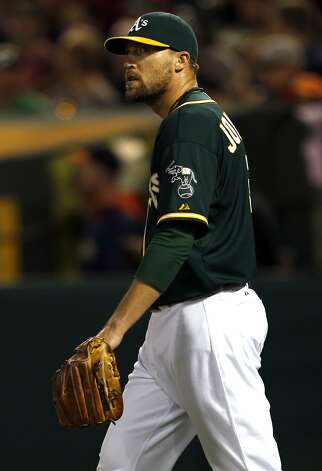
The first question was what to do about Jim Johnson. Coming off back-to-back 50 save seasons he was due a big raise. After a difficult season that resulted in his blowing 9 saves, the Orioles made the decision they couldn't afford 10 million dollars for a closer. So Johnson was traded to Oakland, a move that at the time had many Orioles fans angry - though strangely enough, these same fans wanted to lynch him during the season when he was costing the team games. Orioles General Manager Dan Duquette said he planned to use the money that would have gone to Johnson elsewhere to improve the team.


Shortly after, the Orioles had a deal in place for Grant Balfour. It seemed the Orioles had found their closer, one coming off a strong season with a better save percentage then that of Johnson. The deal eventually fell apart over Balfour's physical, and once again the Orioles appeared to have no closer. The plan was then to try out Tommy Hunter in the closer role.

The Orioles signed free agent Ryan Webb to bolster the bullpen, hoping he would provide help at the back end. Now in AAA, he was having a decent, if not spectacular season with an ERA of 3.80 in 42 games. After addressing the bullpen, the Orioles turned their attention the the rotation, landing Ubaldo Jimenez, who has struggled to the point of being moved himself into the bullpen.

Hunter struggled to have easy, “clean” innings as the closer. After a blown save vs Detroit and a trip to the DL, the Orioles turned to failed starter Zach Britton. Britton's velocity was up coming out of the bullpen and he had been pitching lights out with his ability to sink the ball. The Orioles found their closer after much angst over trading Johnson, the failed physical of Balfour and the struggles of Tommy Hunter.

And let me just say, looking back, does it not feel great having let go of Johnson and missed out on Balfour? Both have had horrible seasons and lost their jobs, with Johnson even being released by the Athletics.

7.15 ERA,YIKES!!

His 5.54 ERA isn't much better than JJ's
(Photo Credit: nbcsports.com)

The Orioles bullpen is currently 8th in ERA (3.08) and 8th in innings pitched (418.1) so far this season. Helping the Orioles to a 25-19 record in one run games and 12-5 in extra innings. Since Britton took over as closer and once the starting pitching started to take off in June, the bullpen has been nearly lights out and is again a giant weapon for the team. Brad Brach has been a pleasant surprise. Darren O'day is having one of the best seasons for a reliever ever, with an ERA of 0.92 in 56 games - he's given up just 6 runs all year. 6!! That's like one a month. To top it off, the Orioles added Andrew Miller at the trade deadline. Miller has an 0.96 ERA in his 10 games as an Oriole. And has the ability to get out both right and left handed hitters. The back end of the the bullpen has turned each night into a six inning game, with the ability to hand the ball over to O'Day, Miller or Hunter and then to Britton.

The Orioles used their bullpen a great deal on the way to the playoffs in 2012. Here in 2014 this Orioles pen may be even better than the one they had in 2012. It doesn't hurt that the Orioles starting pitching is also better than it was in 2012. Come playoff time the Orioles will have one of, if not the best group of pitchers to hand the ball too late in games. If the starters can give them six quality innings the Orioles should have a chance to do some damage in the playoffs with this lethal bullpen.

-Matt Baggette @mlb930

Friday, August 29, 2014

O those O's Fans

On Thursday, Adam Jones was invited to a Q&A session with fans before the upcoming game against the Tampa Bay Rays.  Normally, these get togethers end with no real takeaways other than "That was pretty neat."

But this was a Q&A with Adam Jones, who is known for causing a stir with his words, and this was a Q&A with Orioles fans, who have proven to be, time and time again, irrational, over-reactionary, and take things way to seriously (God forbid you mention Ryan Flaherty to one of these people).  What's pullin' your leg this time, sports fans?

Q: Adam, what's your favorite thing about Baltimore?
A: The airport, because that means I'm leaving town.

Rational people: Oh, Adam.  Always a jokester.

Orioles fans:


(for mobile users: https://www.youtube.com/watch?v=VLiqJ8-T75A)

Remember that time Aubrey Huff called Baltimore a "horse shit town" and meant it 100% (and then promptly hit 32 home runs that year)?  That is something fans should be upset about.  But this?  A light hearted joke?  Earlier today, a caller called into 105.7 The Fan claiming he attended the Q&A, and said that Adams tone was clearly sarcastic and joking.  But some fans did not pick up on that tone, and a Twitter wave of "How dare Adam Jones say such things!" promptly crested.

Adam Jones blows a bubble in your general direction!
If you want to be mad at somebody, fans should be mad at the promotion organizer that thought it would be a good idea to hold this event around 6 PM, one hour before Jones was scheduled to take the field to do his job.  Jones claimed that this was the cause for his short, seemingly uninterested remarks during the session, which induced more anger in the Twittersphere (If Social Media Night sparks a Tweetidemic, does that mean it was a success?).  The fact that Adam Jones even showed up so close to gametime should speak volumes towards his character and how he really feels about this city and team.


Off topic (but on topic), recall before the Jeter-Star Game, Joe buck entered the American League locker room to ask Derek Jeter some pre-game questions.  This is what followed:


(for mobile users: https://www.youtube.com/watch?v=OcqPURUCJ8I)

First of all, I'd like to say that this was staged and dumb.  But the Twitterverse could not stop praising Jeter for being focused and intense so close to game time. What a class act by Captain Clutch!

RELEVANT:


Could you imagine if Adam Jones did that to Gary Thorne?  Good lord.


Another hot topic this week has been the low attendance throughout the Rays series.  In the four games, Camden Yards had a paid attendance of 15,000, 16,000, 20,000, and 17,000 respectively.  This is significantly below the average for this year of 30,000.  All over social media and on the airwaves, there has been a war of words as to why the attendance was so low.


The critics (many of which didn't even attend the games, effectively making them hypocrites), are baffled as to how fans of a team with a commanding lead in the division during a playoff run could possibly not pack the yard every night and back their Birds.  Those who defend the fans claim the start of school in the area is the main factor.  So why did fans not show up in big numbers this week?

The crowd needs to be at least...three times bigger than this!

Well for one, the defenders are correct in the fact that school started this week in the Greater Baltimore area.  Those who scoff at this excuse need to look no further than the historical attendance at Camden Yards.  In 2012, the August 27th through 30th series against the White Sox saw attendance of 10,000, 12,000, 13,000, and 10,000.  This time in the 2011, 2010, 2009, etc.  seasons was no different.  A statistical analysis of these numbers reveals a correlation of school starting and attendance dropping.  "But the Orioles were bad in most of those years!"  While that is true, drop in attendance from summer to fall is still blatantly present.  "But fans should still support the team!  They're in a pennant race!" In the aforementioned 2012, which proved to be one of the most exciting seasons in Orioles history, the O's were on a run, closing the 10 game gap that the Yankees had opened up in the division, and the attendance drop at the end of August was still there.

Don't forget that the cost of attending a professional sporting event is not ideal.  Sure, the Orioles have some of the lowest ticket and food prices in MLB, but it's still more than free.  In a country with a recession slowly fading away in its rear view mirror, people are not going to spend as freely as they normally would.

The cheapest tickets in the park, not on Ollie's Bargain Night or Student Night, are $10 a pop for upper left field reserve.  If a family of five wants to attend a game, that's $50 right off the bat, and only if they sit up top.  Add on the cost of any food or merchandise and the travel some families are looking at close to a $150 night out.  I have had my fair share of solo trips to the yard, and my wallet usually ends up empty (as do the big cans of Miller Lite), so I give my pockets a break for a few games.  Baseball games are not cheap events.  The frugal types will tell you, "Just buy $10 tickets, bring your own food and drink and you'll be fine!" That's admirable, but not something the general public does when they go to a baseball game.

"Buy me some peanuts and Cracker Jacks..." IT'S IN THE SONG, PEOPLE.

Another factor?  The opposing team.  Let's be real, the Rays are not the most attractive team to see play a game.  They just traded their best pitcher to Detroit, and their best player is in a down year.  Also they have Sean Rodriguez.  These are not the Yankees, Red Sox, Cardinals, Phillies, or any of those teams that have appeal outside of their own stadiums. (The Rays don't even have appeal inside their own stadium!)  Don't believe me? The Rays have the sixth lowest average road attendance in the league.  This weekend's visitors, the Minnesota Twins, are second to last in that category as well.  Once the big boys come back to town, the Yard will be full.

So while the Orioles continue to win games, win series, and run away with the AL East (knock on wood), Orioles fans continue to find something to complain about.  Upset with no runs with bases loaded?  Cool.  Irked by an inning ending double play? Yeah, that's rough.  But this?  A joke and attendance?  C'mon O's fans

This article will undoubtedly receive flak, which almost proves my point, but why don't we all sit back and enjoy the best Baltimore Orioles team in 17 years and not nitpick everything like your 12th grade economics teacher?

2014 is a special year in Baltimore, let's focus on that.


Monday, August 25, 2014

Unpress the Panic Button!

Let me start off by answering a few questions. Yes, the Orioles were just swept at Wrigley Field by the lowly Cubs. Yes, the Orioles division lead has been reduced from 9 to 6 games. Yes, the sky is falling.

Okay, I made that last one up, but given some of the fan explosions on social media the last few days, you’d think it was the case. I realize it’s been a rough week for the Orioles. They posted their first losing road trip of the season and lost three straight games for the first time in three months. I’d say that’s a pretty impressive accomplishment. They had a rough trip (4-5) against subpar competition, but O’s fans should not feel that embarrassed. The Indians are one of the AL’s best home teams (14 games above .500, 11 games under on the road), and the Cubs are a .500 home team that does most of their losing on the road. Throw in the fact that the Orioles are 18-25 in day games this season and, well, let’s just be thankful 95% of playoff games are after dark.

The problem with a good chunk of Orioles fans is they look at everything this team does in a vacuum:

Swept by the Cubs? Season’s over! I guess the NL West-leading Dodgers should throw in the towel as well. They lost a series to the Cubs AT HOME three weeks ago.

Lose a series to the “lowly” Indians at Progressive Field (a team that is above .500, by the way…and as previously mentioned, 14 games over at home)? Season over! Someone better break the news to Tigers, Angels and Royals fans that there will be no postseason this year. All three teams lost series at Progressive Field this season.

Manny Machado is out for the season? Season over! Nevermind that the Orioles are 26-19 without Machado’s services this season. You would think O’s fans would have learned their lesson after they proclaimed the season over when Wieters suffered a season-ending injury. While Caleb Joseph and Nick Hundley aren’t the hitters Wieters is, both have combined to match his home run production and provide good (Hundley) to exceptional (Joseph) defense.

Manny Machado's season-ending knee injury does NOT
spell the end of the Orioles postseason hopes. 
I’m not trying to minimize the challenges facing the Orioles. They’re going to have to bring it in September and an anemic offense is going to have to find its rhythm again. Chris Davis and his .190 average – he is currently dead last in the majors in BA of all qualified contenders – are not the answer at third base. The Orioles need to solve that problem fast, whether it’s finding a solution in the minors or trading for someone. Adrian Beltre is an intriguing name – he cleared waivers, so the Orioles do not have to navigate that minefield. But he is signed through next season with an option for 2016, so Texas is not parting with him cheaply.

Orioles fans need to remain calm though. This team still has a 6 game lead over the New York Yankees, who are pulling out wins with a patchwork team at the moment. Only the Nationals have a bigger lead in their division. The Birds have the fourth best record in the majors and their pitching is still going strong, including a bullpen that is among the best in baseball. This is not last year’s team that completely ran out of gas going into September. Workloads have been managed well and everyone should be as fresh as can be expected going into the final month. I’m sure many have visions of last year’s disastrous, season-crushing series loss in Arizona. That is not what this was. The Orioles couldn’t find their bats against some pitchers who have been pitching well this season – even before the Orioles got there – and they had to play three consecutive day games, which for whatever reason, are a weakness for them this year.

The Orioles now begin an 11-game homestand featuring four games with TB, four games with Minnesota and three games with Cincinnati. After that, it’s nothing but divisional games the rest of the way. Judging by social media responses, a lot of people are worried about that, as they seem to think it means the mighty Yankees will use their remaining eight head-to-head games to leapfrog the Orioles.

Let me inject a little sunshine into your day. Who can tell me what the following numbers mean: 7-6, 8-3, 8-4, 7-6? Those numbers, respectively, are the Orioles’ records this season against Boston, New York, Tampa Bay and Toronto. They have owned this division. They have steamrolled it, ground it into a pulp and trampled over the dust. That equals a 30-19 record in the AL East. Toronto is the only other team in the East with a winning record against the division, at 28-23. 


I know weeks like this past week can be frustrating, especially when the Orioles are playing teams most people view as inferior, but the fact is winning on the road in professional baseball is never easy or guaranteed. A 4-5 trip is solid, especially when it’s their first losing trip of the season. But the Birds have risen to the challenge this season and beaten the teams they’ve needed to beat. That hasn’t been the case in years past, and should bring comfort to O’s fans.


Some final parting thoughts to brighten your evening – let’s see where the Orioles rank among American League playoff contenders in record since the trade deadline:


Kansas City: 17-4 (Wow!) 

Seattle: 14-6 
Baltimore: 13-7 
Los Angeles: 12-9 
New York: 11-9 
Oakland: 10-11 
Detroit: 11-12

The boys in black and orange are sitting pretty. So let’s take a step back from the cliff, take a deep breath, settle into that oversized La-Z-Boy and enjoy a September ride for the ages.


And for those of you that still insist on pressing the panic button, Jim Carrey has a little message for you.


--Christopher Mills, cjmills82

Sunday, August 24, 2014

A Hat For A Homer

 
Like most Orioles fans that grew up in the 1990's, I was a giant Cal Ripken Jr. fan. I was such a big fan that I thought I would be the next Cal Ripken and had to play shortstop my first year of little league. And not only did I have to play shortstop but I had to have number 8 as my jersey number. As my first season was starting my dad went to a Sloper's (anyone remember Sloper's?) one day to get me batting gloves or something else small. I can't remember what exactly it was. But when he came home he told me he saw something in the Sloper's, something awesome. He told me about a Cal Ripken hat. I didn't understand. First, what was a Cal Ripken hat? And second, why didn't he bring the hat home with him?

He would explain that the hat had RIPKEN on it, with a number 8 in the middle and some sort of replica of his autograph sown into the hat. I was beyond excited about it. I was adamant that I must have it. My dad wasn't just gonna get it for me cause I wanted it, so he made me a deal. If I got a home run during the season he would get me the hat.

Now I wasn't a guy with much power, especially when I was a little kid. I was a string bean. So getting a home run--in my first year of little league no less--was not something that I was sure I could accomplish. But I was motivated to get that Ripken hat. I had dreams of smacking a ball over the fence and getting the hat.

As the season was about midway through it didn't look like I was gonna get a home run. I was swinging and missing a lot. I couldn't find a bat that worked for me. They were either too long or too heavy. I was a string bean, remember. One day my dad came home from work with a new bat for me. This bat was as long as most of the bats I had been trying to use, but lighter. At practice I was crushing the ball with this new bat. All the sudden I could get to the ball with the lighter bat.

I started to make better contact in games. I remember smashing a ball one game, but foul by a mile. I was not happy. I thought I was gonna get my hat with that one off the bat. A few games later I crushed a ball into left field corner. It was off the wall for a sure double. As I got to second I was slowing down, but as happens in little league there was trouble getting the ball in the outfield. My coach was waving me on. So I picked my speed back up and ran for third. He wasn't stopping there; he was sending me home! As I rounded third I thought oh this might be it. This would count! My dad never said it had to be a home run that left the field, just a home run. An inside-the-park home run would count just the same. So I rounded third on my way home. Sprinting with all the speed my little legs had left, I touched home. I had done it! An inside the park home run! I remember leaping from home plate to the fence behind the plate (which had to be a few feet) where my parents were sitting. As I reached the fence I pointed at my dad and said, “You owe me a hat,” as they were all cheering and yelling. I walked back to the dugout, more excited about my soon to be hat than the home run.

I still have the hat. Cal is still my favorite player. And that story is one of my best and most favorite memories from the time I played baseball.

-Matt Baggette @mlb930